

Accountability - What have you done since I last wrote about letting go and creating new habits?
Two weeks ago I wrote about releasing old habits and getting focused. So far so good. Sugar intake significantly introduced, getting more focused and getting lots done. Consistency is definitely key.
How are you getting on?
The Art of the Letter
One habit I am working on developing is consistency in writing. These newsletters are definitely a great opportunity. Thanks to you all for your engagement.
Last week was National Letter to an Elder Day. I didn't know such a day existed, but it stayed with me.
It made me think about letter writing, and the quiet role it plays in memory, identity, and legacy.
There was a time when writing letters was simply part of life. As a child, I had pen pals - family friends, school exchange partners, strangers discovered through youth magazines. We wrote about everything and nothing. Those letters captured who we were at a particular moment in time. Reading them now brings both nostalgia and a reminder of life fully lived.
They were, in their own way, records of becoming.
How Do You Share Your Memories?
Today, connection is instantaneous. Words are reframed through technology. Messages arrive and vanish. Social media offers carefully curated fragments, quickly consumed. We remain aware of each other, but often at a distance that lacks depth.
Letter writing asks something different of us. It asks us to pause, reflect, and offer presence, even in absence.
I still exchange what I call happy post: letters and cards sent for no reason other than to bring joy. As I prepare a small batch now - notes of gratitude, simple check-ins, acknowledgements of kindness - I notice how unfamiliar the process can feel. The hand moves more slowly. The words require more intention. It is easier, in many ways, not to begin.
But that small act matters. It can brighten someone's day, deepen a relationship, and create something that endures. Unlike messages that disappear into digital archives, letters become physical artefacts. Held, rediscovered, reread decades later. They carry not just words, but the imprint of the person who wrote them.
Treasuring the Legacy of our Elders
This feels especially important when I think of our elders.
Our elders are living archives. They carry stories of places, hardships, joys, and ways of living that no longer exist in the same form. Their memories hold context for our own lives. Explanations for traditions, values, and choices we might otherwise take for granted.
I'm currently captivated by The Repair Shop, fascinated not just by the skill of restoration, but by the way it honours stories held in objects. Yet when I think of what matters most in the heirlooms passed down through generations, it isn't always the tangible item. It's the stories, the letters, the photographs that keep memory alive.
As my generation steps into elderhood, I find myself wondering: what will remain of us? Legacy is often spoken of in terms of achievements or milestones. But just as often, it lives in stories - in the small, human details that reveal who we were, how we loved, what we endured, and what we learned.
Letter writing preserves that humanity. It builds bridges between generations, captures voices that might otherwise be lost, and affirms that a life was witnessed, and mattered.
The invitation is simple.
Write the letter. Ask the questions. Record the stories.
Because one day, we will be the elders. And the stories we choose to preserve, or fail to preserve, will shape the legacy that remains.
Who might you write to, while there is still time?
If you'd like a card or letter from me, send your postal address to [email protected] — and watch out for some happy post on its way.
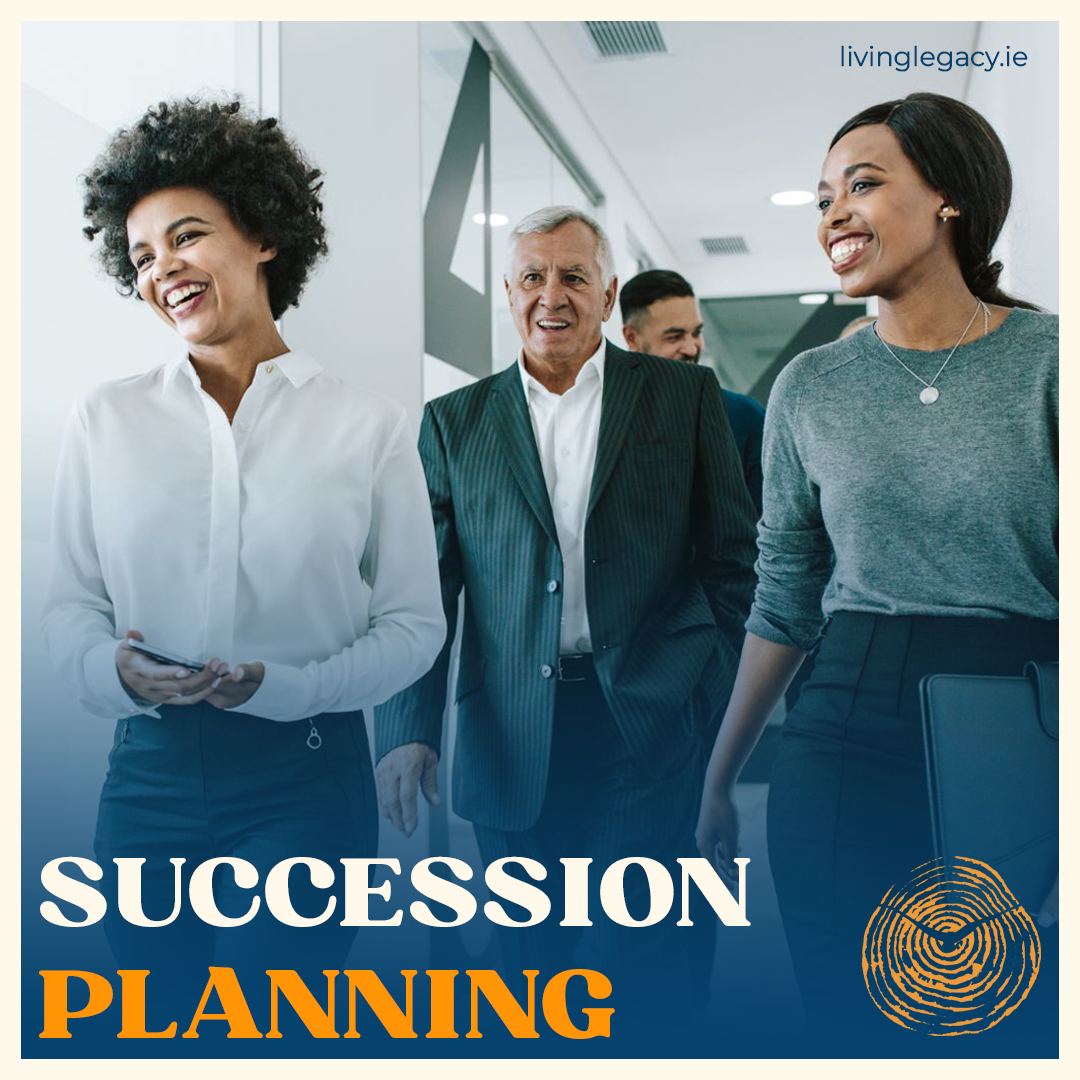
Succession Planning: Updates from the Past Month
Over the past month, I've been guiding Donegal Local Development Company (DLDC) and the Community Wetlands Forum (CWF), along with their respective client and community groups, through the process of developing their succession plans.
This is my third cohort with DLDC and my first with CWF, and with each group I deepen my understanding of what effective succession planning really looks like in practice. The range of organisations involved is what makes it so rich: community centres, Tidy Towns, local NGOs, heritage groups, and government agencies — each with their own context, challenges, and stakes.
What strikes me most is how many organisations treat succession as something they'll get around to eventually. Seeing more of them recognise the urgency - and act on it - is genuinely encouraging.
Both programmes run through April, with a final month of masterclasses, mentoring, and weekly challenges ahead. Each group will close by presenting their draft succession plan. I can't wait to see what they've built.
A timely reminder for EU organisations:
If you lead or work within an EU-based organisation, now is the time to begin preparing for the Pay Transparency Directive, which must be ratified across all member states by 6 June 2026.
Succession planning is a natural entry point for this work. It not only protects your organisation's legacy, but helps ensure the governance structures needed for compliance are properly in place.
To get started, reach out to me at [email protected] and we can talk through the best approach for your organisation.
______________________________________________________________________________
Advance & End of Life Planning: Updates
I'm back in Donegal next month for a half-day Advance Planning workshop, and currently in conversation with several organisations about bringing similar programmes to communities around the country. If you'd like to host a talk or workshop for your group, get in touch at [email protected].
In the meantime, a number of clients are mid-process with their Enduring Power of Attorney and household administration — a busy and meaningful time.
This Month's Action: Get Your Accounts in Order
One of the most practical gifts you can give your future self, and your family, is having your financial and service accounts clearly organised. Here's where to start:
1. Forgotten savings (Ireland) Contact Irish State Savings to track down any prize bonds, savings certificates, or Post Office accounts you may have lost track of over the years. They're more common than you'd think.
2. Dormant bank accounts Old accounts that were never properly closed may still hold funds. Contact your Central Bank to reclaim money you assumed was long gone. In Ireland, start here.
3. Consolidate your bank accounts Where possible, move household bill payments into one joint account (if married or in a civil partnership). If one partner becomes ill, having a single shared account prevents payments from being frozen. Add an authorised person as a backup. But note this only becomes active when accompanied by an Enduring Power of Attorney granting legal authority to act.
4. Utility bills Put these into joint names if you share a household. It's a small admin step that prevents significant chaos later.
These are simple actions, but the peace of mind they bring is anything but small. For guidance or questions on any aspect of advance planning, visit livinglegacy.ie.
Spread the Word
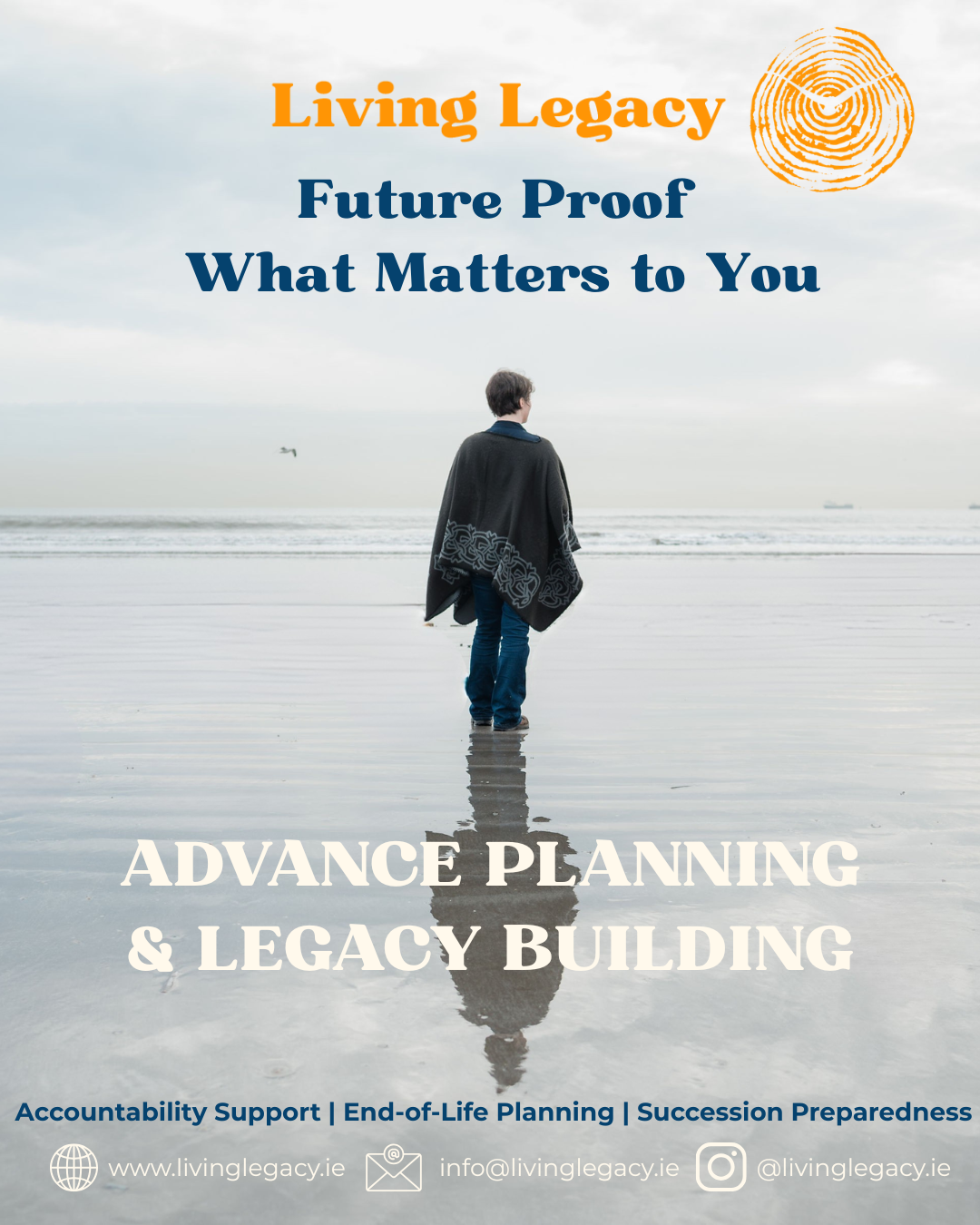
As a Living Legacy reader, you already understand why advance planning matters. But so many people haven't yet taken that first step — and sometimes, all it takes is the right prompt landing in the right hands.
I've put together three new brochures to help start that conversation:
I'd love for these to reach as many people as possible. If you know someone who would benefit, please share the relevant brochure — it costs nothing and could make a real difference.
I've also created a new flyer now being distributed to GP clinics, solicitors offices, wealth management practices, and funeral homes. If you'd like a bundle for your own community, just drop me a line at [email protected] and I'll get some out to you.
The more people who have a plan in place, the greater the peace of mind. For themselves, and for everyone who loves them.
As the days now brighten here in the Northern Hemisphere, it is time to sow seeds for your garden to bloom - the physical and metaphorical. So make time for you to get your advance plans in place.
I look forward to helping you navigate the journey ahead.
Wishing you a great week ahead.
Jen
Jennifer McConnell (Founder, Living Legacy)




Responses